Yes We Did!
Recently, we had the pleasure of a classroom visit from Jenny Wales! My students were honored to have a Desmos Expert stop by and see us in action. Students found creative ways to “put the point on the line” and quickly discovered that considering the slope of each line would help them with the process.
Favorite S quotes from class during @Desmos “Put the Point on the Line”: Student 1: “Wait… you can use the slope for this!” My Face While Overhearing This: 💚😁💚 Student 2: “Wow. What you said is, like, a math teacher’s dream.” #iteachmath #MTBoS
— Cathy Yenca (@mathycathy) October 4, 2018
 One big A-HA? That the universe doesn’t owe us points on a line that are equally spaced. For example, in a follow-up activity on paper, students encountered this problem. This table of values –> had many students arguing about whether the relationship was linear at all. They’d calculated the “constant rate of change” for several years without necessarily deeply considering proportionality. I love when big ideas show up in math arguments!
Another idea that surfaced from our slope-y day I shared in the following tweet. It was so encouraging to hear from other teachers that we should embrace methods students prefer to use and understand.
Question: My Ss prefer finding slope of a line from given points using a table to find the “change in y” and “change in x” versus using the subscript-laden formula… every time. Do you force Ss to use the slope formula? Why, and when? #iteachmath #MTBoS
— Cathy Yenca (@mathycathy) October 6, 2018
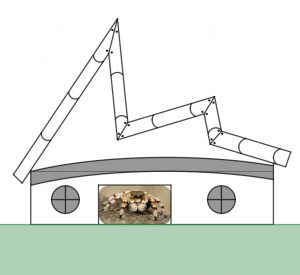
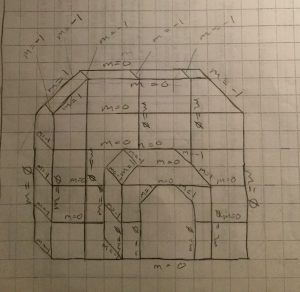
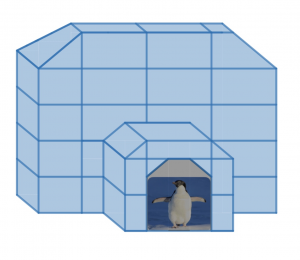
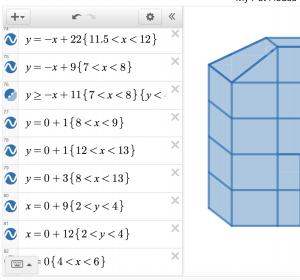
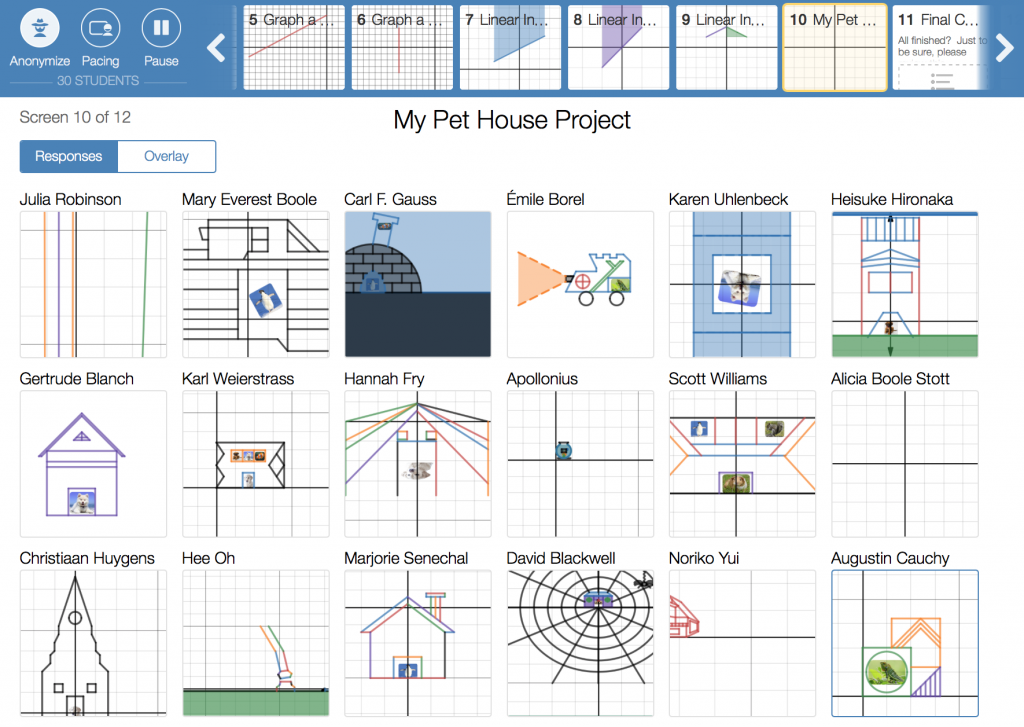
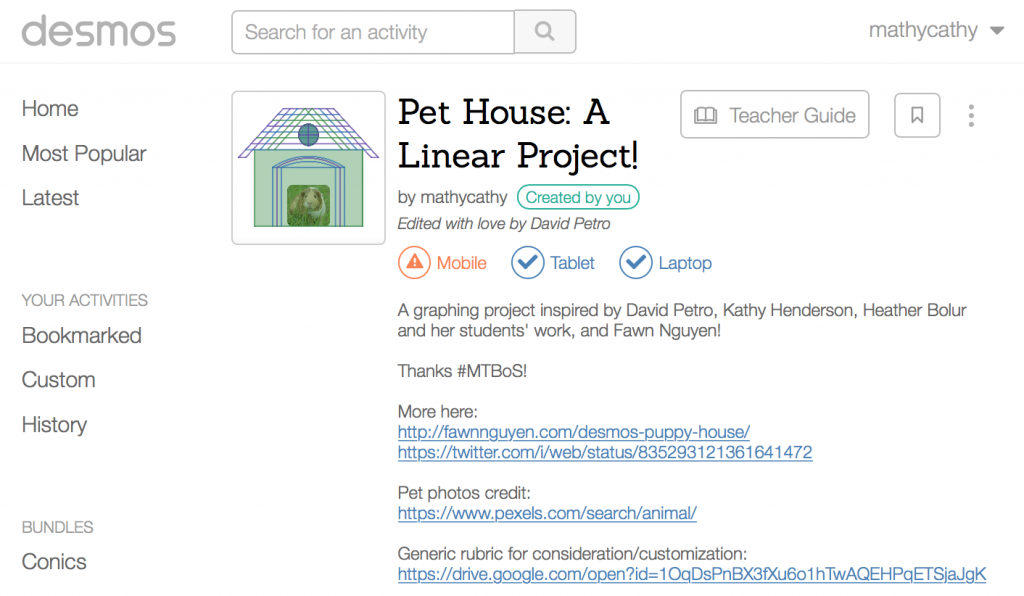
An aside… did you notice that Jenny and I posed for a photo in front of last year’s students’ Desmos Pet House projects, preserved on custom art canvases for all to enjoy?!? It looks like some other 7th graders are really rocking this project too!
Last week, my 7th graders designed Pet Houses using @Desmos and @mathycathy’s classroom activity! I’ve tried drawing activities before, but the investigations about restricting the domain/range and using inequalities to shade really helped and motivated students! Thank you! pic.twitter.com/MqgHtOAcR5
— Alison Ridgway (@ridgway2math) October 14, 2018
Yes We Did!
At #LearnFestATX this past June, my math pal Nadine and I shared about using Desmos Activity Builder to create Card Sorts in every content area. It was an honor to have yet another Desmos Expert, Jay Chow, mention us in his recent blog post! By the way, I can’t overstate the awesomeness of Jay’s Desmos Breakout activities! Go work ’em yourself with your student-hat on, then launch them for your own students! *Update* Check out my awesome colleague using Desmos in her History classes!
I love using @Desmos to play digital Guess Who games for historical figures. If you have 1:1 devices, I highly recommend giving it a try! #sschat #historyteacher pic.twitter.com/YRSjSkKLev
— Kendall Hiott (@historyhiott) October 17, 2018
Yes We Did!
My Twitter pal Steph Reilly and I had an impromptu-and-virtual-Desmos-Collaboration this past Saturday morning. The power of sharing, tweaking, and creating resources together across time and space never ceases to amaze me. Check out Steph’s awesome creation to help students understand WHEN and WHY we “flip” the inequality sign.
Improved @Desmos activity: Linear Inequalities: WHY do we flip the inequality?! https://t.co/Kkq263qKGQ Thx @mathcathy for making this better! (Answer slide can be deleted for live use in class)
— Steph Reilly (@reilly1041) October 14, 2018
No He Didn’t.
If you missed it, read this thread. You might experience laughter (from the comments) and also be moved to tears (from this ridiculous #pseudocontext).
No he didn’t. #MTBoS #iteachmath pic.twitter.com/JzpxznRNex
— Cathy Yenca (@mathycathy) October 9, 2018


 The Lobby Piano Concert Crew. With a focus on creativity, and a piano in a cozy corner of one lobby area, singers and musicians alike couldn’t resist a good sing-a-long. You’re looking at a group of us that stayed up singing 3- and 4-part harmonies until 3:00AM… for perhaps 5 consecutive hours?!?! I think it’s safe to say that none of us teaches music as our profession, yet a common interest had us all sacrificing sleep for the opportunity to share our creativity through music – real piano, real voices, but technology close by to provide lyrics and chords. What a blast! I’ve added a few songs I forgot that I love to my HomePod favorites playlist, thanks to this bunch… and so many others who aren’t pictured here, who opted to sing for a time… and ALSO get some sleep! 😉
 I can completely relate to that blog post! It’s powerful to be in a place personally and professionally that I take pride and joy in embracing the title of ‘dork’. When my pal Michael Mills shared this photo he’d taken of me, rather than want to hide under a rock, I celebrated my positively dorky self, and all of those whom I’ve befriended who would also wear the dork title as a badge of honor. Be joyful. Have passion. Trying too hard to be cool is just plain boring.
 So, reading this back, it falls short of describing the whole experience, but I guess that’s how it’s supposed to be. So many conversations, big and small. So many ideas and friendships. And thanks to all sorts of social media, our conversations never stop – we’re just getting started! Maybe you’re curious about becoming an Apple Distinguished Educator and you’ll apply next year? In the meantime, you and I can enjoy the continued sharing by searching through the hashtags below.
 (1) Conferences

 Went to the craft store to find something to attach all of these mini-mirrors to, and found a wooden square I liked. Spray painted it, loved it. Had NO IDEA it would end up being a 5-by-5 square… I was just trying to create a new art piece for my classroom. Then it hit me… PYTHAGORAS!!!! Phase 3 of this project is currently on hold until I use up a bit more face powder. I’m all outta empty compacts.
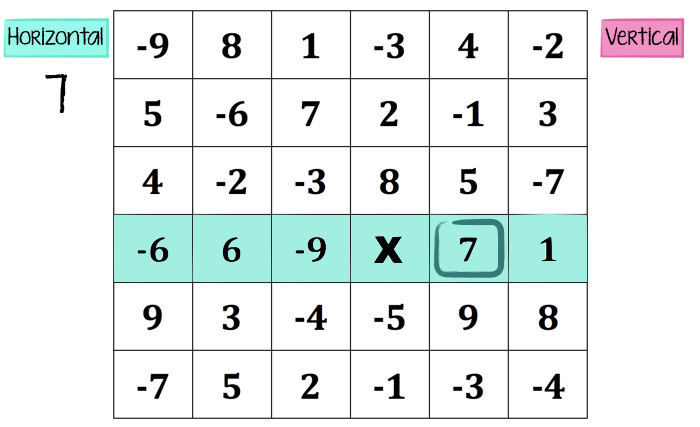
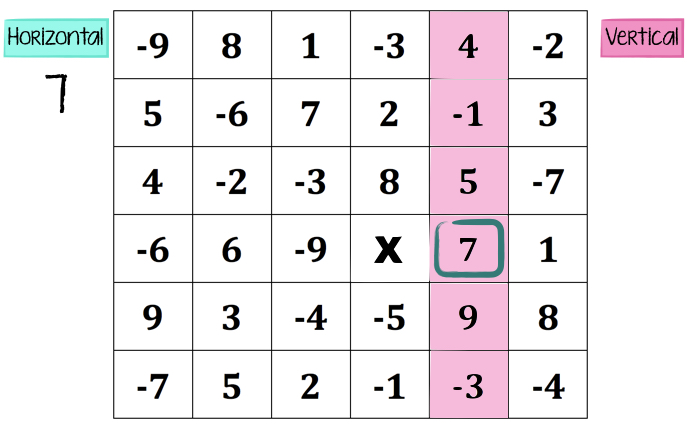
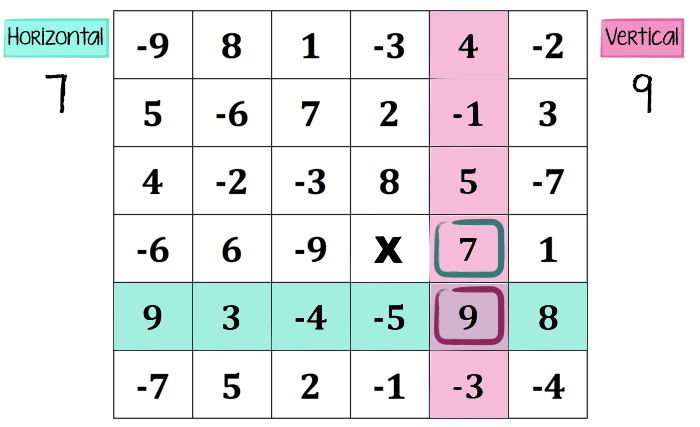
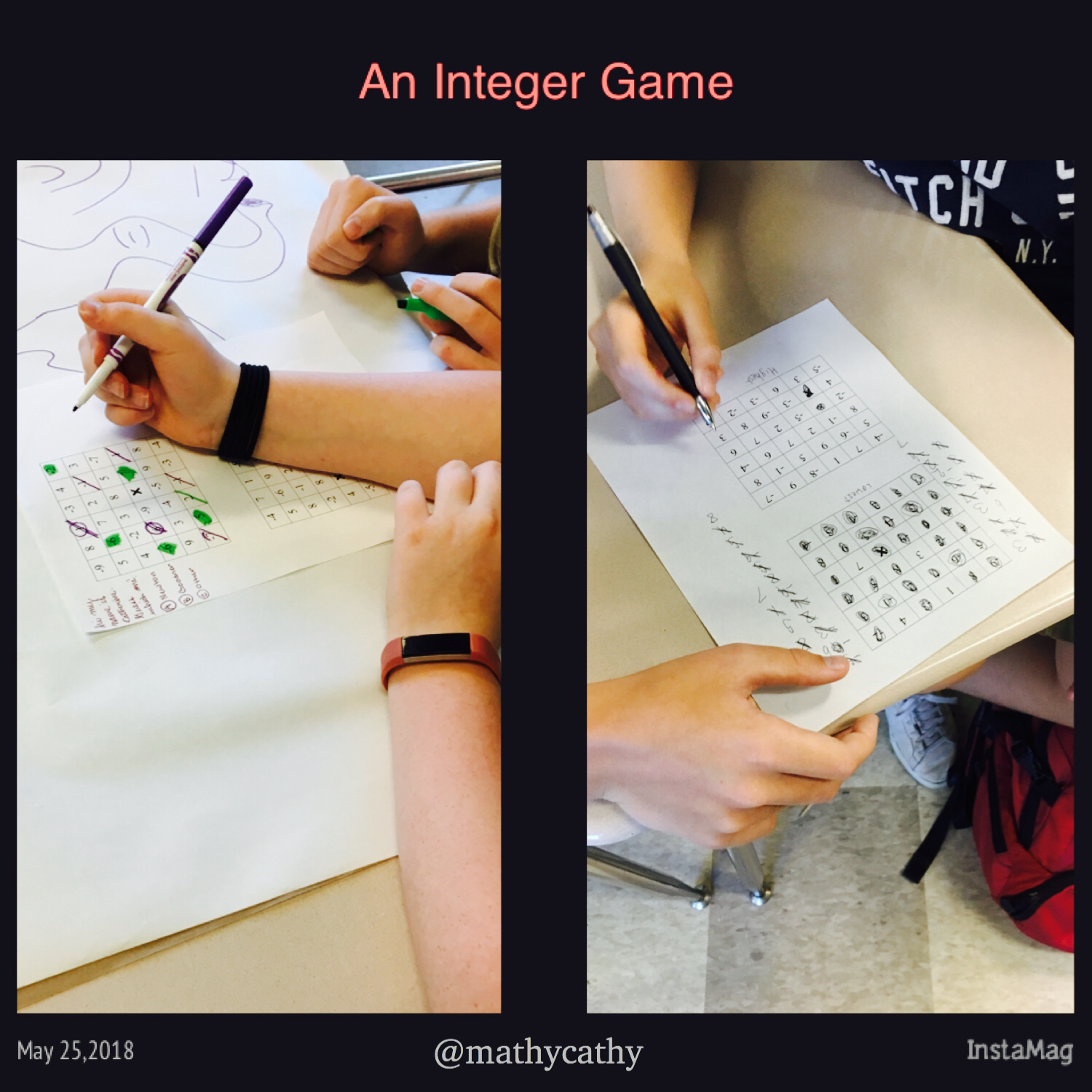

 P.S.
P.S. Lisa Bejarano and her apprentice teacher Eric recently
 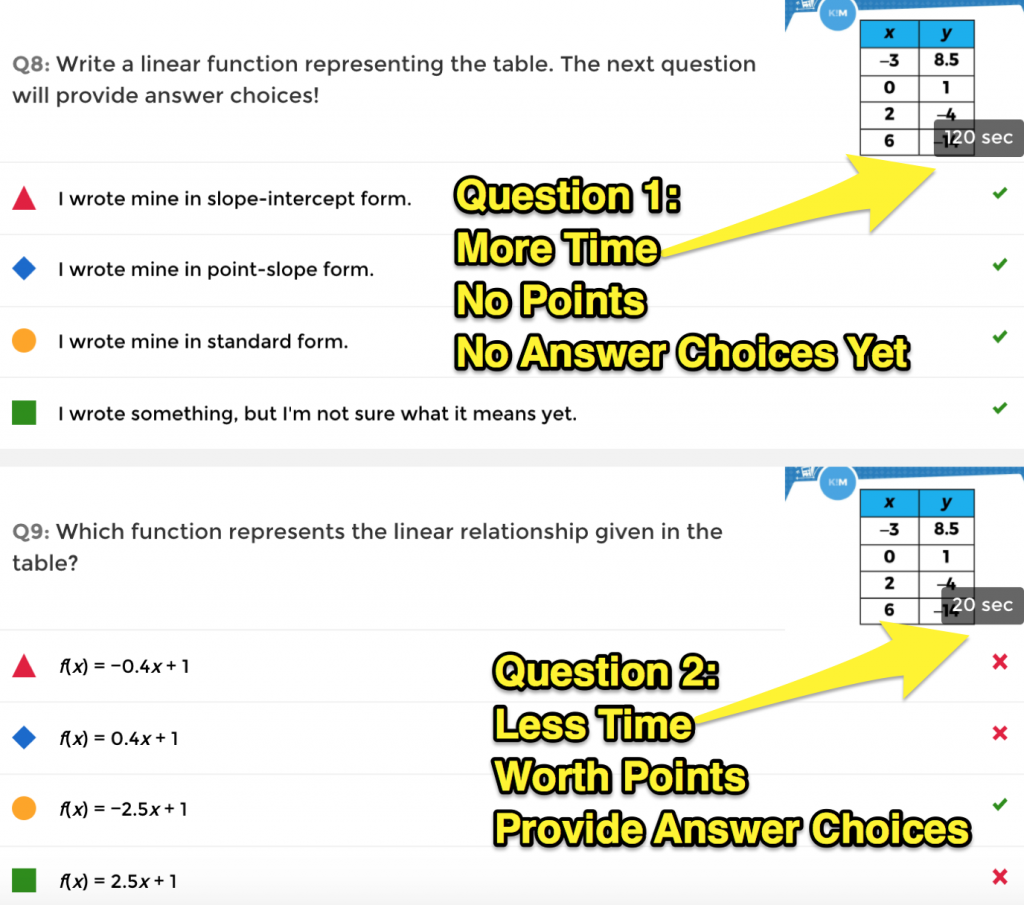 I like to pose more in-depth math questions by using TWO questions in the Kahoot! platform.
 identify and interpret attributes of graphs can serve as a great pre-assessment, mid-lesson check-for-understanding, exit-ticket… you name it! Students feel confident that they can complete visual tasks in a shorter timeframe, so they work well within the platform.
 Rather than use Kahoot! as a “quiz” or “assessment”, consider using it as a platform for posing questions that guide students to understand concepts incrementally.